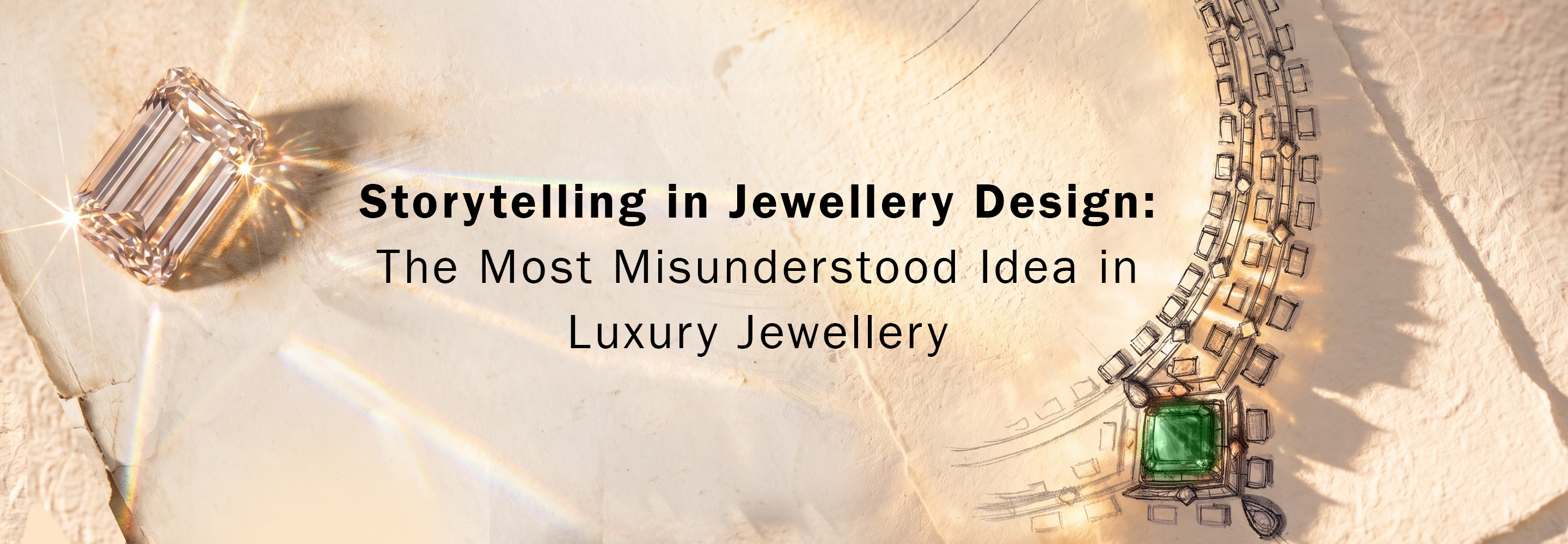
Storytelling has become one of the most talked-about ideas in luxury jewellery. Almost every collection today claims to have a story. However, storytelling remains one of the most misunderstood aspects of jewellery design.
Many designers create a beautiful piece first and write the narrative later. The story becomes part of the campaign, the catalogue or the website. It explains the collection, but it never shapes it.
The strongest collections follow a different path.
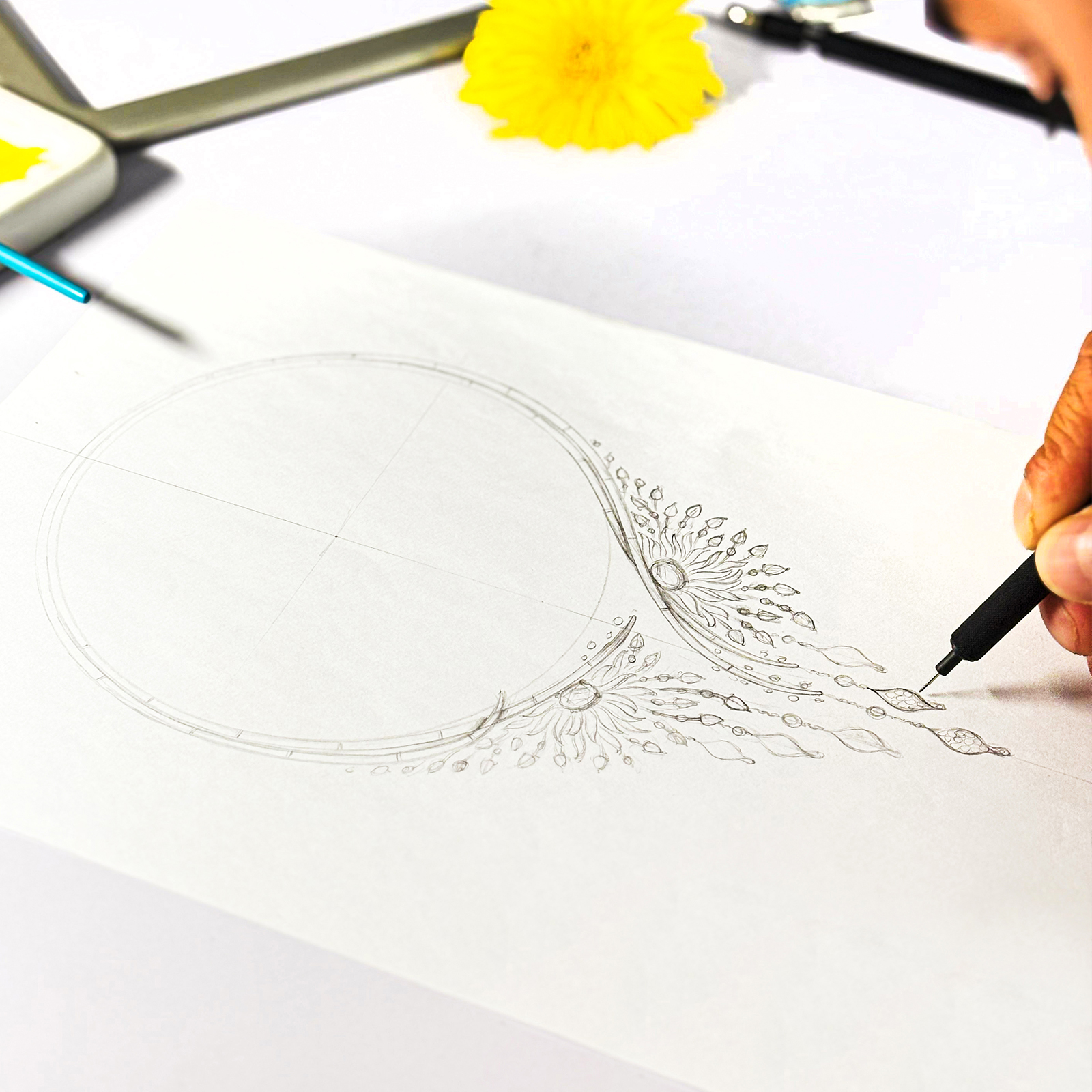
They begin with an idea. That idea influences every creative decision that follows. It guides the first sketch, the choice of gemstones, the proportions, the rhythm and even the way the collection evolves. Consequently, the final designs feel complete because every piece belongs to the same creative world.
In other words, the story does not support the design. The story creates the design.
Storytelling Creates Design Discipline
People often associate storytelling with emotion. While emotion certainly matters, storytelling serves another purpose that designers recognise immediately.
It creates discipline.
A clear narrative tells the designer what belongs in a collection—and, more importantly, what does not.
That clarity influences every decision. It determines the choice of gemstones, the movement of the composition, the use of negative space and the balance between every element. As a result, each design strengthens the collection instead of competing with it.
Storytelling Creates a Design Language
Storytelling does much more than inspire a collection.
It creates its design language.
When every collection begins with a different idea, every collection develops its own visual vocabulary. The lines change. The proportions change. The movement changes. Even the relationship between diamonds, coloured gemstones and metal changes.
That is why no two collections should ever look alike.
Consider some of the collections developed by Amit J Ghosh.
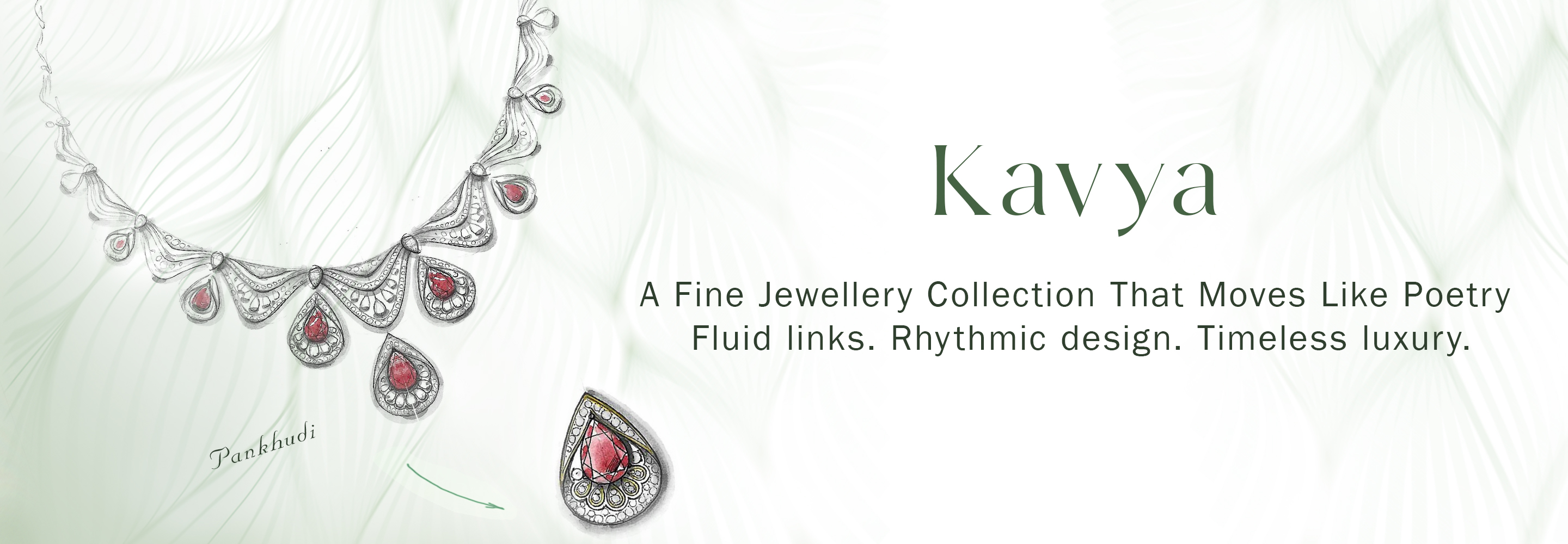
Kavya explores poetic rhythm through continuity, repetition and graceful flow. Every composition reflects quiet elegance while maintaining structural balance.
Floral Ecstasy studies nature in motion. Instead of copying flowers, it captures the rhythm of petals as they bloom, overlap and unfold into sculptural forms.
Meanwhile, The Golden Glow celebrates warmth through harmonious compositions of gold and coloured gemstones. Every design builds radiance through proportion instead of excess.
Calcutta Diaries draws inspiration from the city’s architecture, heritage and artistic spirit. Rather than recreating landmarks, the collection translates the feeling of Kolkata into contemporary high jewellery.
Similarly, The Signature by Amit J Ghosh explores the architectural beauty of baguette diamond jewelry. The collection does not treat baguette diamonds as supporting stones. Instead, it allows their geometry to define every composition. Their long, disciplined lines establish rhythm, structure and proportion. Consequently, every design celebrates precision over decoration, creating a signature collection that expresses luxury through architectural form and controlled reflections rather than conventional sparkle.
Storytelling creates recognisability.
The purpose of storytelling is not simply to make a collection emotional. Its purpose is to make it unmistakable. Remove the logo from an exceptional collection, and people should still recognise who designed it.
That recognition rarely comes from a single motif or gemstone. Instead, it comes from a consistent design language.
And every design language begins with a story.
Technical Mastery Protects the Story
A strong idea deserves equally strong execution.
Unfortunately, many beautiful concepts lose their identity during production. Small compromises alter proportions, weaken movement or disturb the original balance. Gradually, the story begins to disappear.
Technical mastery protects that story.
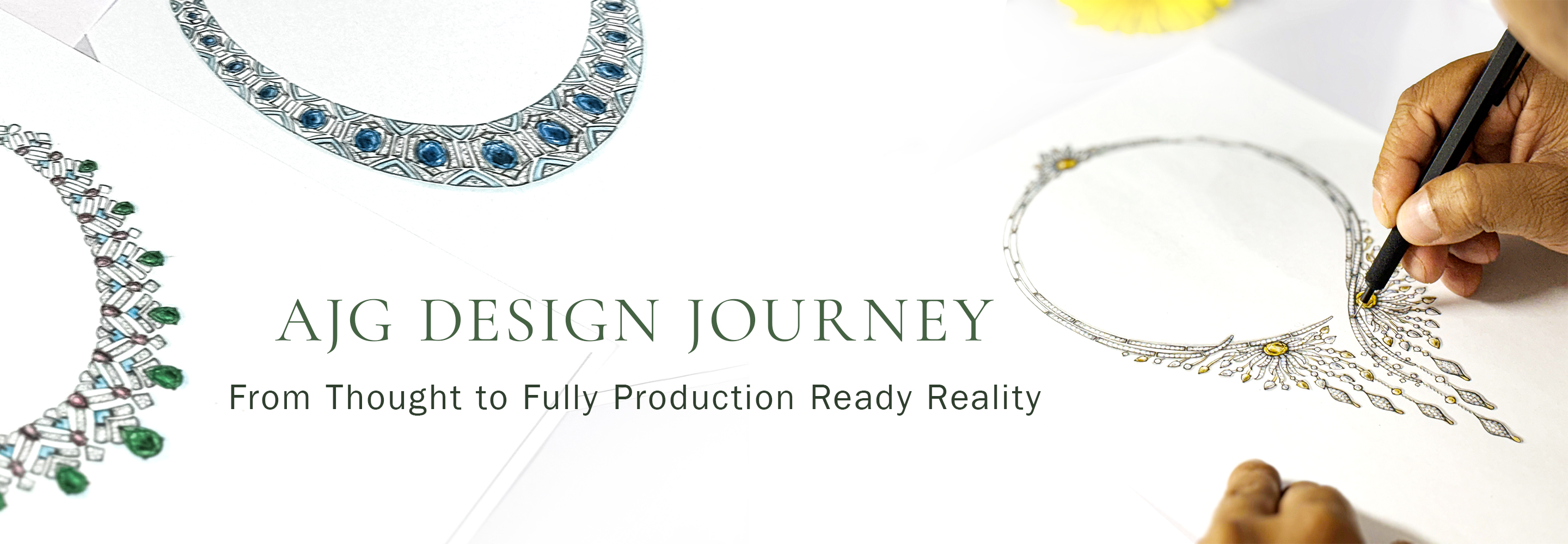
Designers must think about engineering while they sketch. They must understand gemstone proportions, structural integrity, manufacturing methods, setting techniques and wearability before they finalise a design. Consequently, the creative vision remains intact from concept to production.
That balance between creativity and technical precision makes the difference between an attractive sketch and jewellery that performs beautifully in manufacturing.
At Amit J Ghosh, this approach has shaped the way we develop high diamond jewelry design solutions for luxury retailers and manufacturers around the world. Every design respects both creative intent and production reality because neither should exist without the other.
Why Luxury Retailers Need Story-Driven Design
Today’s luxury market offers more jewellery than ever before. Consequently, distinction has become harder to achieve.
Craftsmanship remains essential. However, craftsmanship alone rarely creates identity.
A memorable collection gives customers something they can recognise long before they notice a logo. It gives retailers a design language that remains consistent across necklaces, earrings, bracelets and rings. Moreover, it creates long-term brand value because the collection develops its own identity instead of following short-lived trends.
That is why storytelling matters in jewellery design.
It should never begin in the marketing department.
It should begin with the first sketch.
When the narrative guides the proportions, the gemstones, the engineering and the final execution, the result becomes more than a beautiful object. It becomes a collection with its own identity.
Whether creating baguette diamond jewelry, developing a distinctive signature collection, delivering high diamond jewelry design solutions, or working as a trusted design partner for high-end jewelry retailers, the principle remains the same.
The story should never explain the design. The design should prove the story.